
People are at the heart of the Raids Over York project. We are proud to be able to record the memories of lives lived during the raids of those who were often only children during the war. Such a child-focus approach builds on the oral history research that has been carried out previously by York Oral History Society and others. Memories shared with the project include the night a local school was bombed, and a newspaper boy who was left with undelivered papers after one raid destroyed homes on his ‘Round’.
Raids Over York also seeks to engage with York’s local communities, to help them better appreciate and explore their local heritage in connection with the WW2 raids on the city.
From the Archives
Part of the Raids Over York project involves delving into the archives. Many of the people who feature in the reports of the raids, or appear in photographs taken at the time, remain unnamed and consequently unknown. When possible, however, the project aims to see if those who were affected by the raids, as civilians, volunteers, military personnel, can be identified and a greater sense of who they were can be understood. This requires further archive research, but also information from you – through answering calls for information in the press and on social media and people’s oral testimonies.
As the project progresses, this page will chart some of the successes in finding names and details for the formerly ‘unknowns’, as well as ongoing calls for information. Perhaps you have the missing bit of information that would help identify one or more of the ‘unknown’?
ARP & Fire Warden photographs
In May 2021, Raids Over York put out an appeal in the press and on social media asking if anybody could help ‘identify York’s forgotten Civil Defence heroes?’ The appeal was based on a small number of group photographs of Civil Defence volunteers that the Explore York’s Archive Team had located.
You can really get a feel for the individual characters in the photographs. You can see that many have their day or work clothes on underneath their uniforms – different ties, blouses etc; some have smart shoes on, others army-style boots. A few of the photos detail the names of the people in them, which is great as it allows us to put a face to a name – some of whom are mentioned in the official A.R.P. reports of the raids. But and unlike the other group photographs in the archives, this pair of photographs had no or only a few names associated with the people shown in the photographs (and in the case of one of the photos, the location was unknown.)
Due to a phenomenal response form members of the public, many names of the sitters have now been identified. (See the captions of the images below for more details – including those still to be identified)
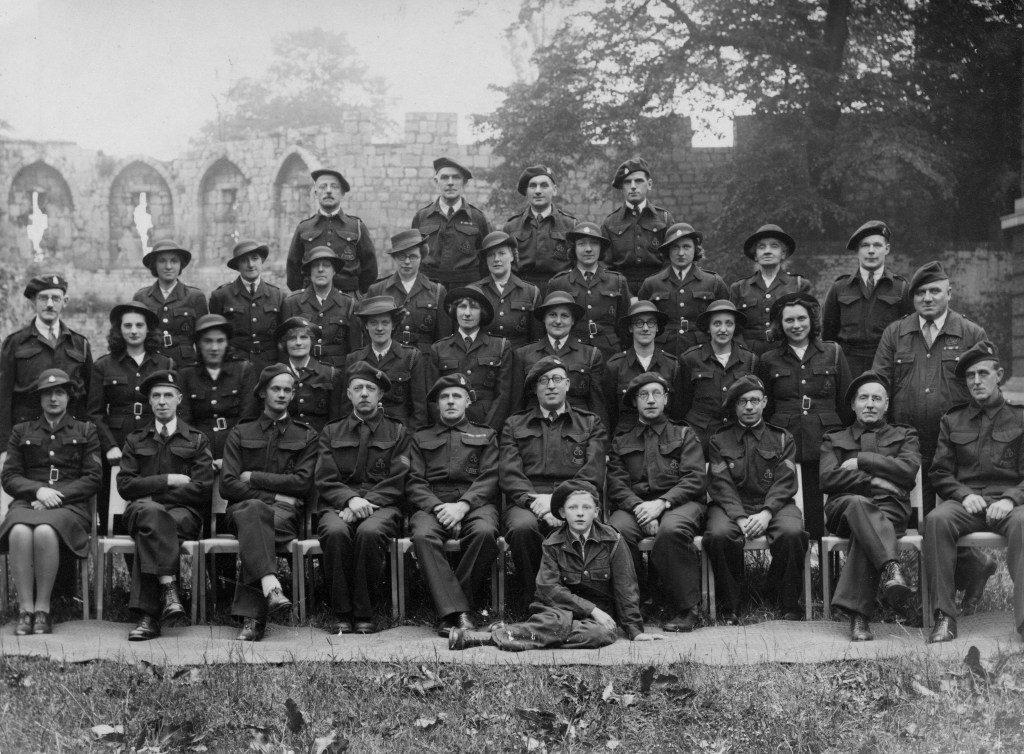
Back row: [?], [?], [?], [?]
2nd row: [?], [?], [?], [?], [?], Catherine Kettlewell, [?], [?], [?]
1st row: [?], [?], [?], [?], [?], [?], [?], [?], [?], [?], [?]
Seater row: [?], possibly Mr Forrester – Grantham Drive, [?], [?], [?], R.S. Oloman (Chief Warden), [?], Alfred Craven, [?], [?]
Youth at the front: thought to be William (‘Bill’) Henry Harrison – a messenger/runner during the war
IMAGE: Explore York Libraries and Archives / City of York Council
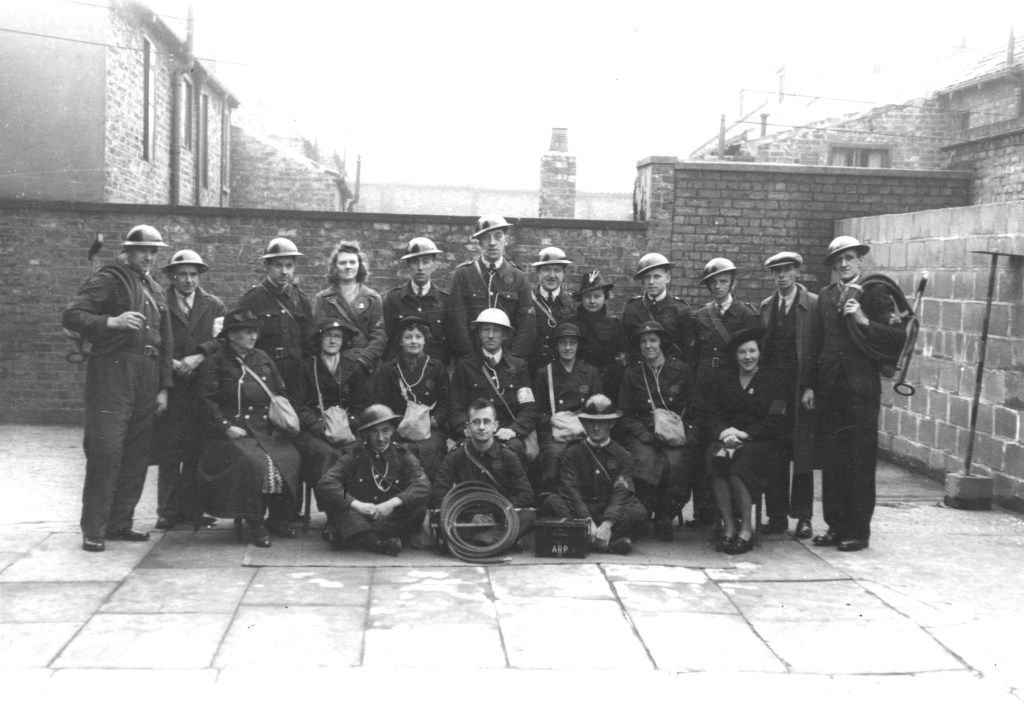
Back row left to right: [?], [?], [?], [?], W Walkington, W Wain, Joe Calam, Mrs Olive Calam (Joe’s wife), Ernest Pallister (lived off Hull Road), W Brett, [?], Alf Woodley – No.2 or 3 Etty Avenue;
Seated: [?], [?], Joan Wright – 2 Hawthorn Grove, F G Hemenway (in white helmet), Alice Hodgson – 2 Glen Road, [?], Joyce Calam
Sat on the floor: All unidentified.
IMAGE: Explore York Libraries and Archives / City of York Council
Those who’ve replied to the appeal are often direct family relations of the people shown in the photographs. This has allowed further, fascinating details come to light, all of which helps to develop a feel for the individual ‘characters’ beyond the portraits.
Of the Civil Defence photograph taken in the Museum Gardens, many of the sitters remain unidentified.

All the same, Catherine Kettlewell’s [2nd row, 4th right] granddaughter, Lesley, mentioned that her family understand Catherine was sent to Hawkhills near Easingwold for ARP training.
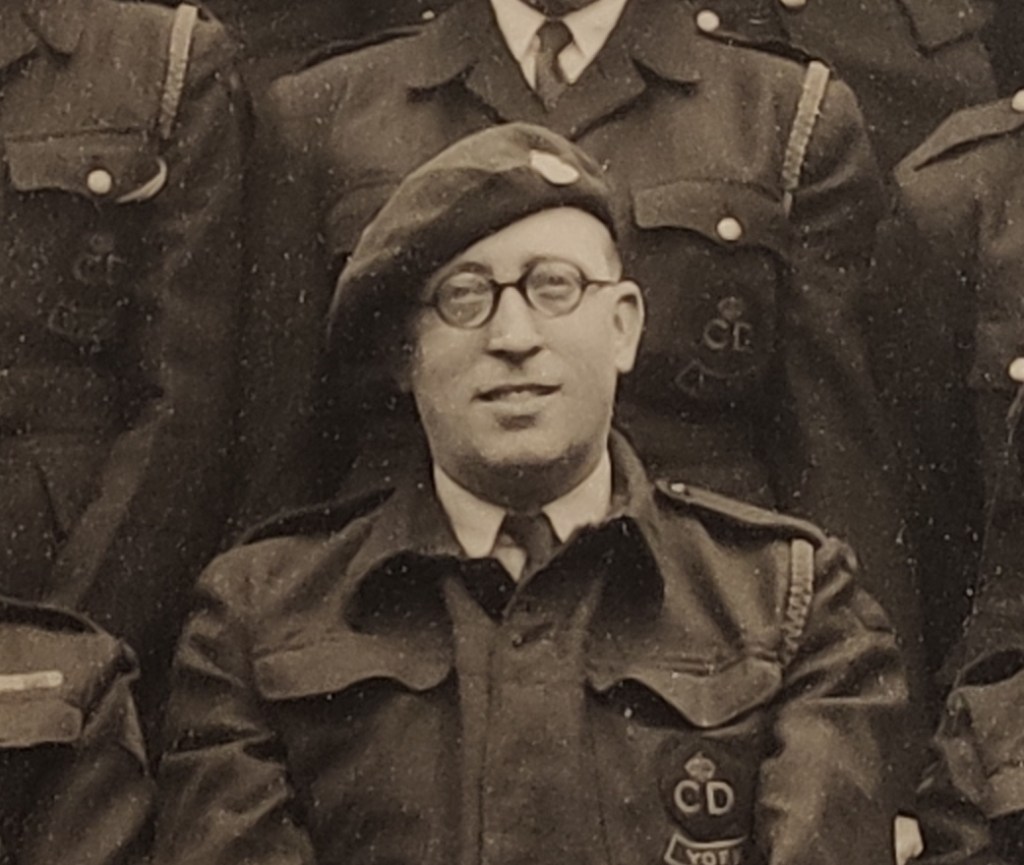
The Chief Warden, R.S. Oloman, has also been identified [1st row, 6th left].
And, William (‘Bill’) Henry Harrison – a messenger/runner during the war – is thought to be the youth sat on the grass at the front of the photo.

Layerthorpe / Hallfield Road ARP
The response to the Layerthorpe / Hallfield Road ARP photograph appeal has been very good indeed.
Sue Gough has provided rich information on several of her relatives who were ARP wardens in various Wards in York. They include Sue’s great grandfather, Robert Henry (known as Harry) Woods, who was an ARP Warden for Bilton St and Redeness St in Layerthorpe, and he did fire watching. His granddaughter Joan remembers that she tried his helmet on. It was so heavy that it split her bottom lip when it slipped. He lived at 12 Bilton St, Layerthorpe. He died in 1942, cause unrelated to the war.
Joan Wright & Alice Hodgson
Rosie (and her cousin, Ian) was quick to spot her mother, Joan Wright, in the Layerthorpe ARP photograph [sitters, 3rd from the left]
At the time of the photograph being taken, Joan lived with her parents at 2 Hawthorn Grove. (Joan’s father. Harry Wright, is thought to have done fire watch duty in the Market Street/Coney Street area; he and his brothers ran Wright’s Baby Cars shop at 36 Market Street, whilst her brother, Alan T. H. Wright, was in the navy on the Russian Convoys.)
During her ARP service, Joan became good friends with Alice Hodgson [sitters, 5th from left], who lived with her parents and sister at 2 Glen Road.

Rosie sent two further photos of her mother as an ARP warden, probably taken on the same day as the ‘group’ photo. One photo is of Joan on her own, in the other she is sitting in the centre, with Alice Hodgson to the left.
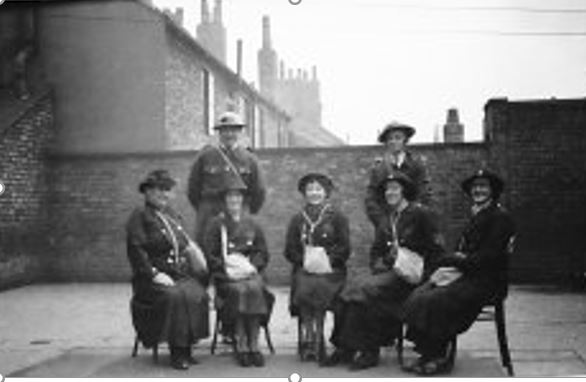

Joan Wright wrote a note about her life as an ARP warden in York before she passed away in 1992, which Rosie has kindly shared with Raids Over York.
It offers an invaluable insight into the ‘real life’ of an ARP Warden, a heady mixture of bravery and fear with tiredness and boredom, and yet also good humour and camaraderie. Joan’s concern for the wellbeing of various shops and services , often relating to her then upcoming wedding, also help add a human dimension that remind us that ARP were very much individuals with ongoing everyday (and ‘big day’!) interests and issues to occupy them.
Memories of Wartime: Joan Wright ARP Warden
War was declared on the 3rd September 1939, but before war was declared, I joined the A.R.P. (Air Raid Precautions), which was a group of people covering the whole of York (and in other towns also, formed to give initial first aid and to report ‘incidents’, i.e. if bombs were dropped and caused damage, should war arise. In my district, the person in charge was our local vicar (Rev Bainton of St Cuthbert’s church) – blinded in the first World War, where he had served as a chaplain. We had to have training which lasted for some months and we had to forgather on the eve of the 2nd September and told that war was to be declared the following day, and that we had to report to our posts scattered throughout the district. These were centres and had first aid, a telephone, etc. Our post was situated in the yard of a school in a densely populated industrial area and was purpose built with a protective ‘blast proof’ walling front – it was quite a small room. The whole area was very vulnerable to attacks from the enemy as the gas works and electricity works were in the area. Since the war many of these streets have been cleared away and the whole area industrialised.
Before I was married in 1942 and for a year afterwards, I was secretary/nurse to two dentists and we were very busy indeed, looking after the toothaches of many people, as so many of the young dentists were called up into the Services. The hours were long from 8.30 until 7pm, working on Saturdays and a half day on Wednesday. I was very tired at the beginning of the war as in addition to my work at the surgery, the wardens were ‘on duty’ every night there was an air raid warning and sometimes they used to go on for hours. We had to patrol our sector in twos and my friend (Alice) and I used to take turns having a little sleep on a bench in a public shelter whilst the other was alert. The reason we had to patrol our area to see everyone was alright and that no lights were visible as these would have been helpful to the enemy. Every night we used to have hordes of our bombers going towards the coast to Germany – there were a lot of R.A.F. stations around York. We also heard enemy raiders over and learned to know the different sounds of their engines. We were near enough to Hull from York to see the bombing and the sky lit up by fire and bombs. The night the gas works was hit, not far from where my parents lived, all 18 windows in the house were blown in and glass was scattered across my bed. We had to have the windows boarded up until the glazier could repair them, and 1500 houses were without gas for cooking, not many people had electricity for cooking and in any case there were many ‘cuts’. We were lucky however and had a fire ‘range’ with a big oven and were able to to help our neighbours.
I was sector leader for my warden’s post and used to organise social events to make a little money to give, at Christmas time, to the families of our wardens who were called up to join the services. The families were very poor and we were glad to help them. We also used to collect so much money each week from the wardens and buy Savings Certificates to give to those wardens when they returned home from the war. Our blind vicar called regularly at our warden’s post, on foot and often during the vilest of weathers, in pitch darkness as we had no street lighting. It was quite a frightening experience, especially when York was bomber during the Baedeker raids, i.e. when the cathedral towns were bombed. In one little street in our sector, 19 houses were damaged but only one person killed, but some injured. Incendiary bombs were dropped over the road from where I lived with my parents near the gas works; in fact, very near to a very large gasholder built by the German firm when I was still going to school in the late 1920s. We had an unexploded bomb dropped immediately outside our post, but no one was injured. There was much damage in York when this air raid took place – the railway station and a train and numerous buildings. The window of the milliner’s (in Coney Street) where my wedding headdress was being made at the back, was unharmed and my property undamaged. Also there was a little church in the main shopping street (Coney Street) completely demolished and this was next door to the engraver’s where a silver cigarette case was being engraved for the bridegroom. This took place on 29th April 1942, just two weeks before we were to be married. Fortunately, the very old church where we were to be married, and our beloved Minster worked, was undamaged.
We did not have air raid shelters at my parents’ house, but we took refuge every time the air raid siren went off, in an internal passageway which was protected by several thicknesses of walls. Before my daughter was born, I had her baby clothes, etc. packed up down here and also when she was a tiny baby immediately the siren went, all the family came to this passage, where we had a mattress and warm blankets and we stayed until the ‘all clear’ went. As I was section leader in the ARP, I was chosen to represent the wardens and was presented to the Princess Royal (Princess Mary, aunt of the present Queen).
When my husband’s friends used to ask him if he had a photograph of me. He would show them one of me in my gas protection suit with a helmet on and a gas mask. One of the duties of the wardens in the early days, just prior to the war, was to go around all the houses in the area to find out how many adults and children and babies there were living in each house to enable them to be issued with gas masks and one of the houses was the home of Mr & Mrs Dench, the parents of Judi Dench, the actress – she had two brothers, one was a doctor and the other an actor.
I was in a ‘reserved’ occupation (dental nurse & receptionist) during the war i.e. I could not leave my job without permission to join up, and when I eventually stopped work, just before my daughter was born, I had to type a letter of explanation to the employment bureau with my boss’s signature!
Rations were very strict during the war and afterwards for some time – we had powdered eggs and very little meat, sugar and butter, and coupons or sweets and clothes too. I was lucky, lace was not rationed and one did not have to give coupons so my wedding dress was made of lace! After the war, for a long time, things were short, but we managed somehow, but homes were difficult to find as no new ones were built and there were very few to rent. War is a dreadful experience for so many people it causes so many problems and much unhappiness for so many people.
Some of the younger men I knew were killed or injured – were shipwrecked – suffered dreadful stress from bombing raids. My brother was in the Royal Navy, his ship escorted convoys up to Murmansk in Russia and later he was in a minesweeper which swept the channel clear of mines before D-Day.
Ernest Pallister
Kerry C. contacted Raids Over York after her father recognised his father (Kerry’s grandfather) in the Layerthorpe / Hallfield Road ARP photograph.
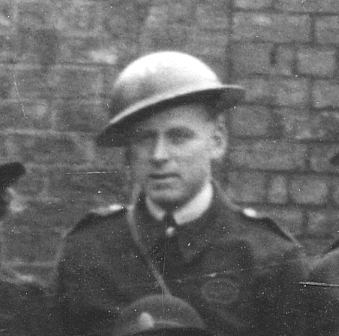
At the time of the war, Ernest Pallister lived in a street off Hull Road and worked at the local brickworks. Kerry said her dad picked Ernest out of the picture and was surprised he was in the ARP, as Ernest never mentioned it to his son. While Ernest died when Kerry was only 2 years old, her mother remembers Ernest had a limp and had told her it was a shrapnel injury he got in the war; (maybe whilst the raids were happening?) Ernest worked for many years at York Railway Station as a Porter until he died.
Walmgate Ward ARP Photograph
Al Freimanis contacted Raids Over York with a further photograph of York ARP Wardens, this time from the Walmgate Ward, covering the Hull Road, Kent Street, Heslington Road areas.
Al’s mother, Dora England is 8th from the left in the standing row.
If you recognise any one in this photograph (or any of the photographs!), or have additional ARP photos related to York, then please do get in touch with Raids Over York.

Standing, left to right: [?], [?], [?], [?], [?], [?], [?], Dora England – 32 Heslington Road, [?], [?];
Seated: [?], [?], [?], [?], [?], [?], [?].
IMAGE: Al Freimanis
Liz contacted Raids Over York hopeful that a similar group ARP / Fire Wardens photograph might have been discovered covering the Fishergate area; not as yet, but we do hope so!

Liz also sent a ‘Fire Watching Scheme’ list from 1941. In detailing the weekly civil defence arrangements on Fishergate, it shows the management that was required on a micro-level. This stretch of Fishergate, between Marlborough Street and Sandringham Grove on the western side of the street and Winterscale Street and Elmwood Street (since demolished) on the eastern side, covered only 14 properties in total.
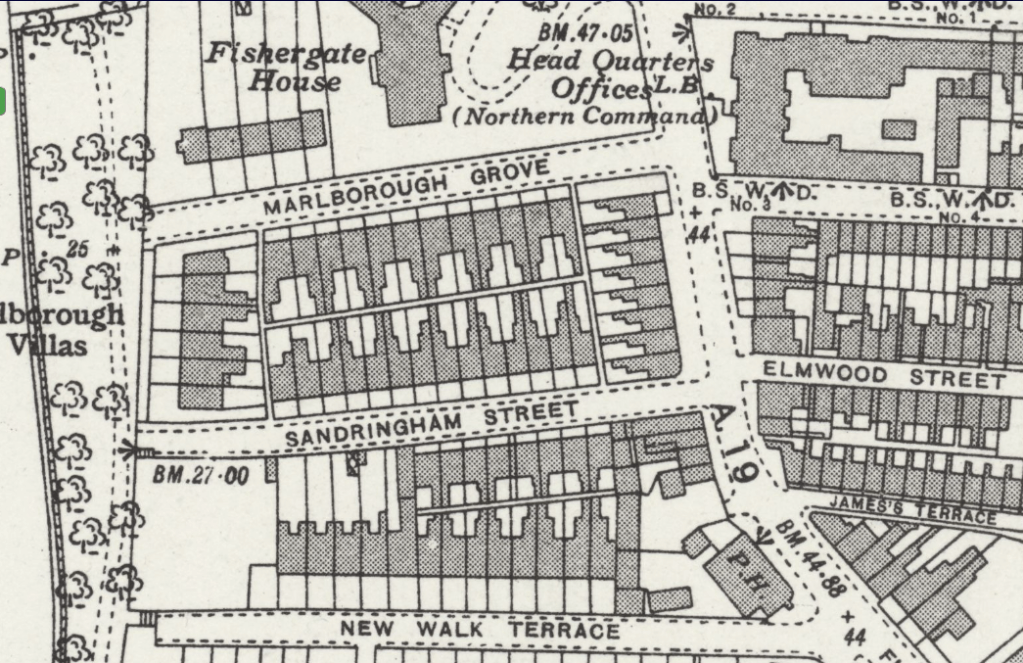
The surnames of those on the List covers 14 different families, including, presumably two Smiths – one living at No.49. (They include Mr Morrell, Liz’s father.) This suggests that most, if not all, residents of this stretch of Fishergate were involved in fire-watching on a weekly basis.
The surnames and uses of prefixes also gives an insight into the family dynamics of civil defence in a well-to-do area such as this. The Cooks – Mr and Mrs – shared every other Thursday; the Cloughs – Mr (the local butcher) and Mrs – divided their involvement with Mr Clough partnering with Mr Benson on a Monday, Mrs Clough with Miss Rafton on a Wednesday (Mrs Rafton being ‘on reserve’ every other week). Mother and daughter, presumably, of the Benson family shared firewatch on Friday, with the Smith sisters in charge of the Saturday.
It isn’t known if this level of thoroughness was typical of every street or so up and down the country, or whether these Fishergate residents were particularly fastidious in their organisation. It does however nudge us to question whether all civil defence was arranged ‘top down’ from the national and local government and military structures, or if local people often took the lead (with possibly the official set-up stepping in in areas where there was no provision). The ‘Fire Watching Scheme’ list also reminds us what a commitment it was for everyday people, with shifts running for a member of most families from midnight to 6am on one day, sometimes two days, every fortnight.
Ernest Grantham (ARP Warden)
We are delighted that Angela has been in touch with Raids Over York to tell us about her grandad, Ernest Grantham, who was an A.R.P. Warden in York. Ernest, born in 1892, was a joiner at Rowntree’s, and was so all his life, with the exception of his service in the First World War. He was initially apprenticed to his father at Rowntree’s, who had set up the Joiners Department there.
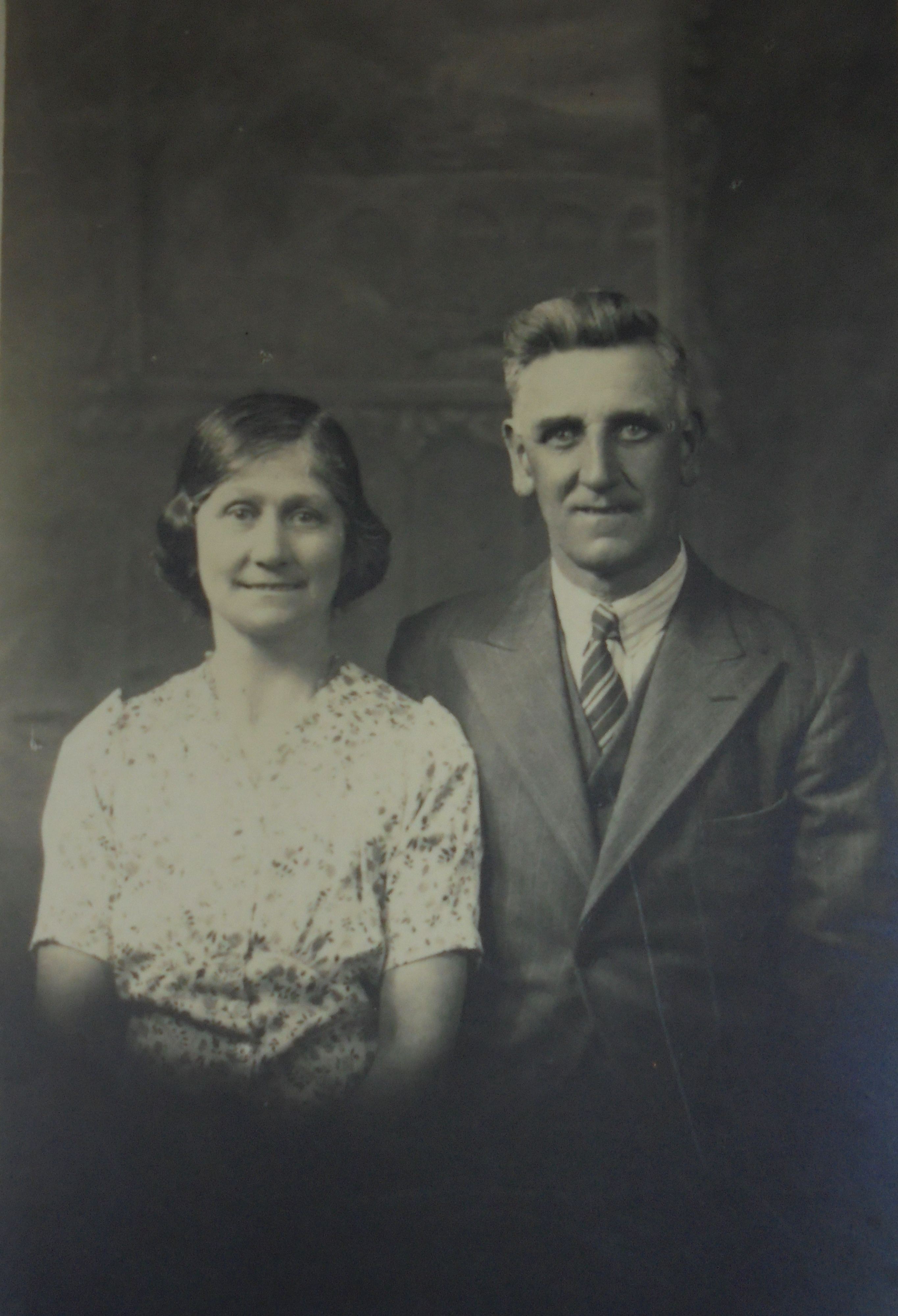
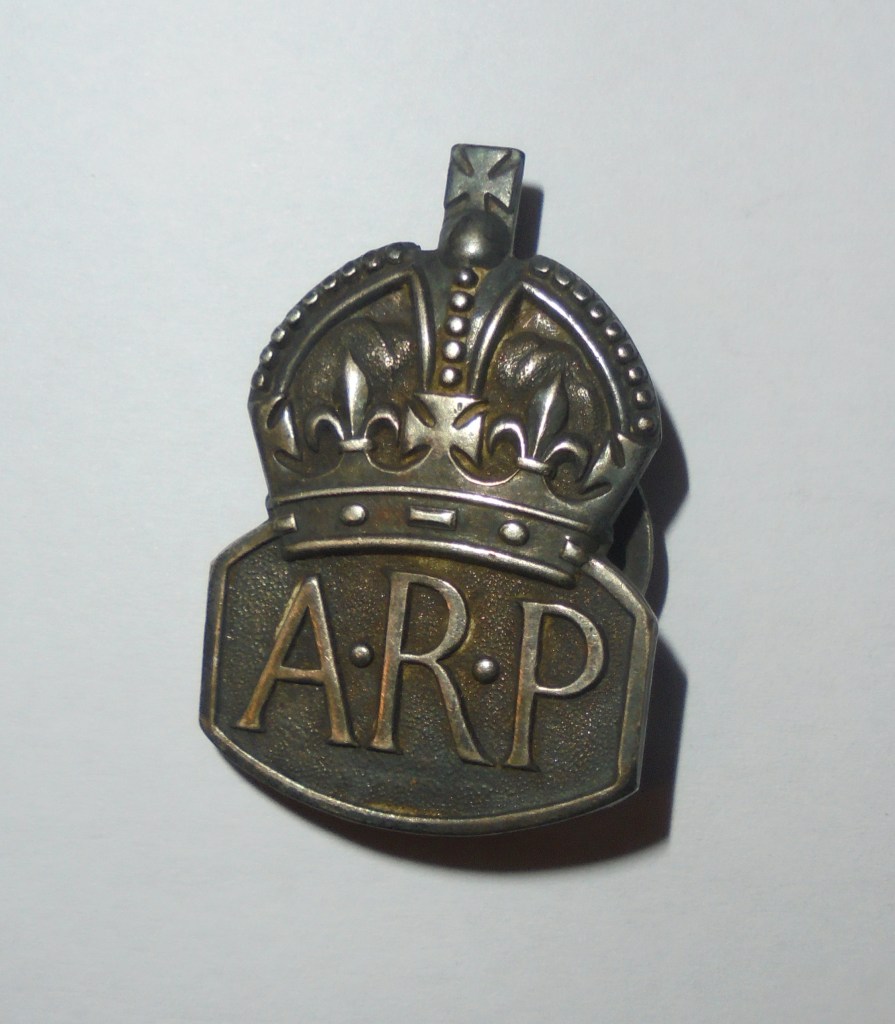
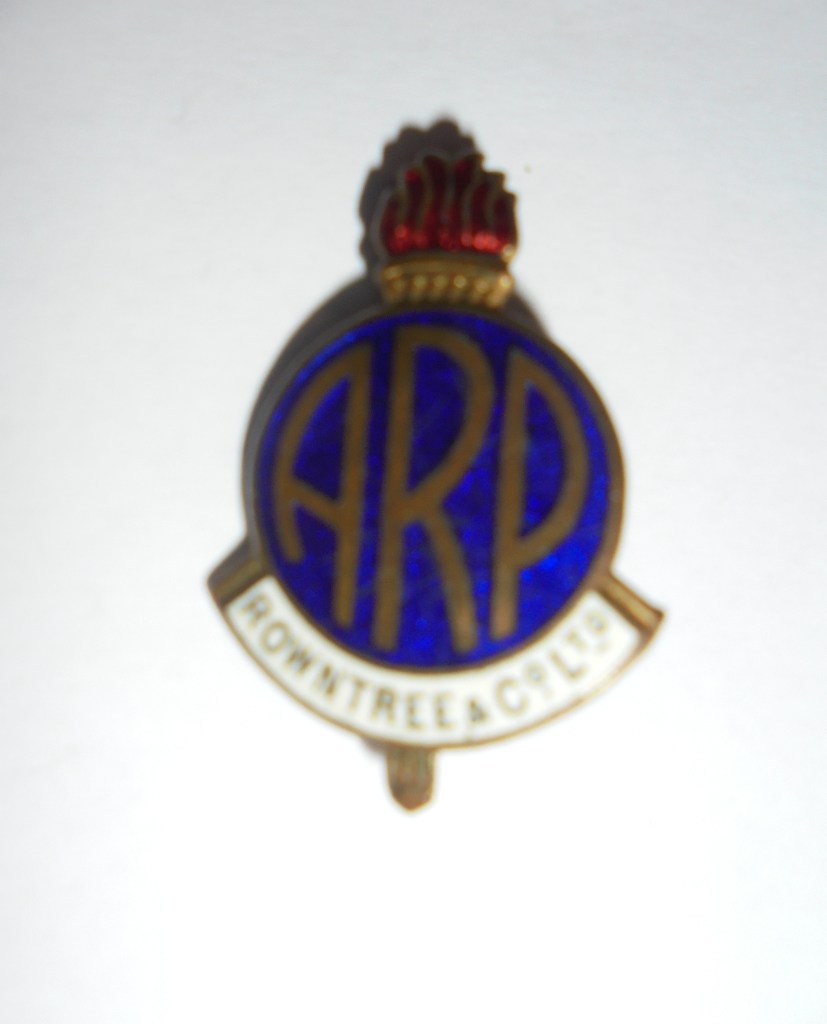
Angela, who was very close to Ernest, mentioned that he never spoke about either of the World Wars; a not uncommon characteristic of the ‘War generations’. She has treasured his A.R.P. certification card, respirator bag, A.R.P. badge and Rowntree’s A.R.P. badge.
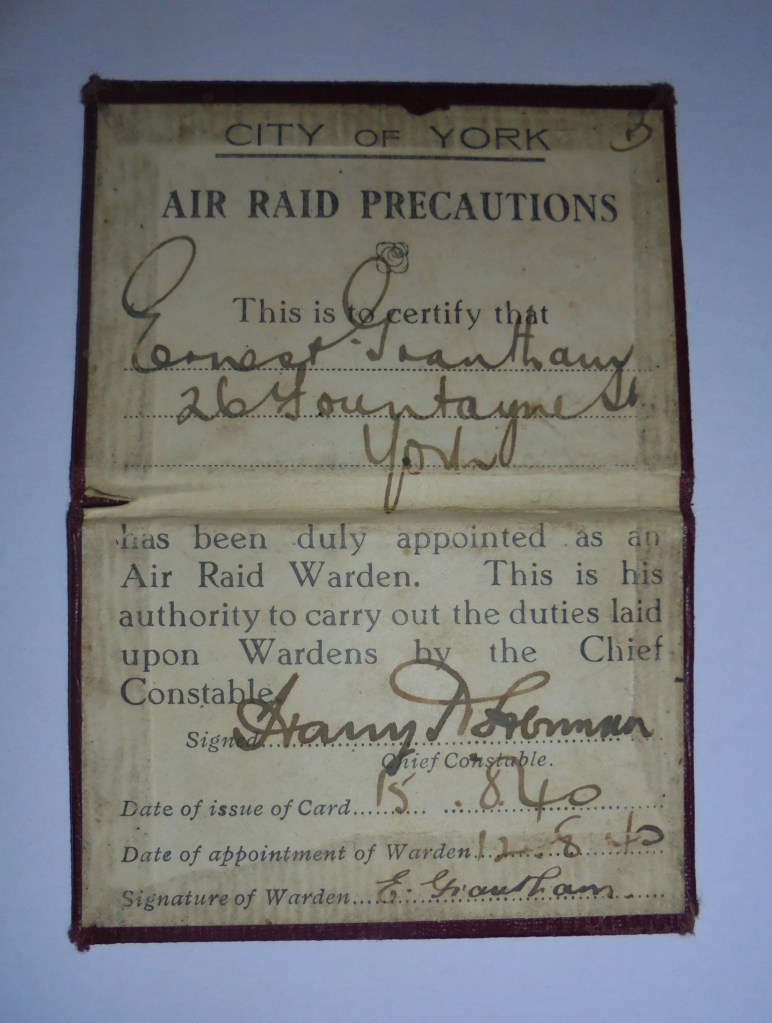
The A.R.P. certificate card is especially interesting. The date of appointment of Warden is 12 August 1940, which was the day after the first bombing raid on York. It indicates a strong civic reaction on behalf of Ernest, and likely too other men and women in the city – a sense that WW2 had arrived in their city and they were willing to ‘do their bit’ (in the parlance of the government’s recruitment drive of the day).


Cyril Barlow (ARP Warden – Strensall)
From the other side of the world, in New Zealand, Jane S. has contacted Raids Over York to tell us about her grandpa, Cyril Barlow, who was an A.R.P. Warden in Strensall.

Standing, left to right: Bill Wilson, Fred Hemmingway, John Mayhew, Mr Giddings, Charlie Tinson, Mr Beaumont, Cyril Barlow, Harry Reed.
Seated: Charlie Hirst, Wharrem Wilson (Chief Observer HQ), Pat Light (head observer), Dick Cundal, Charlie Young
Front seated on floor: Herbert Inns, Tom Tinson (Deputy Head Observer) Mr Gray
IMAGE: Jane Smelt
Cyril had a cycle and taxi business, based out of his house on Station Road, Strensall. He worked in it until his death in 1974. He was 37 when war broke out and was very involved as a civilian at Strensall camp.

Cyril’s daughter (Jane’s mum) also served in York during the war – in the Observer Corps on the Knavesmire where she was based with “B Group”. The openness of the Knavesmire provided an excellent position to spot incoming Luftwaffe planes, and hosted some of the city’s main anti-aircraft batteries.
Who are we missing ?
While our appeal was for only for those in the two York Ward’s ARP photos that have come to light, we are delighted that other information has also come forward for other Wards.
Have you a relative who was involved in the civil defence of the city, or caught up in the raids as a civilian? Perhaps they have a great story you would be willing to share?
Or maybe there’s a mystery connected with someone in York during the raids?
Do you have a similar ARP group photo?
If so, please do get in touch using the comments box below or email us at raidsoveryork@outlook.com
 RAIDS OVER YORK
A family friend, ‘Auntie Aggie’, was on ack-ack duty, I think. Agnes Hatfield or Hadfield? She was a Rowntrees factory worker before the war.
LikeLike
Hi. Thanks for this info. Do you happen to know what she did with the ack-ack brigade? (And where were they?!)
LikeLike
There seems to be absolutely nothing reported about the rocket range that was in existence on the Knavemire during all these raids. It doesn’t seem to be mentioned in any books about raids over York. My father was Sergeant C.A. Cameron. (with a crown, whatever rank that was) in it. The whole shebang was run by a Major Rowntree and a Captain Ruddock. (I have a photo of the complete outfit during that time). The outfit never actually fired any rockets. The nearest they did, was during a raid, when a spitfire came onto the scene, and it was decided not to shoot at the enemy craft. I remember very clearly, where exactly the range was, as I visited it many times as a ten year old. I hope this information is helpful and for me, it would personally clear up why so little is known about it.
LikeLiked by 1 person